Ghana Chamber of Mines’ response to the press statement by the IEA on the renewal of Gold Fields’ Tarkwa mine lease
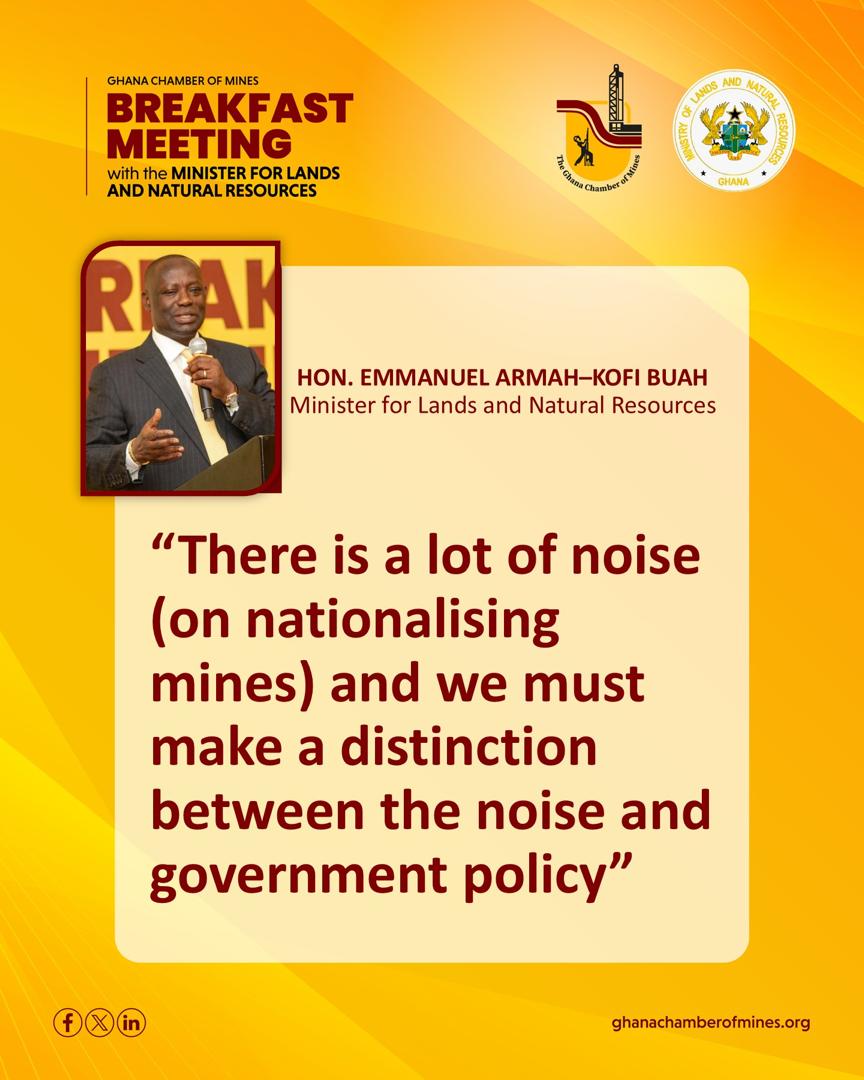
The Ghana Chamber of Mines welcomes constructive and progressive discussions on how the mining sector can play a more transformative role in accelerating Ghana’s economic development. The Chamber shares the national aspiration for mining to translate more visibly into prosperity for Ghanaian communities. Such discussions are therefore important and necessary. However, they must be anchored in factual accuracy, historical context, and a proper appreciation of the operational and economic realities of modern mining. It is against this backdrop that the Chamber wishes to respond to the press statement issued and the press conference held by the Institute of Economic Affairs (IEA) on 13th May 2026, which calls on Government to reject Gold Fields’ application to extend its Tarkwa Mine lease. The statement contains material factual inaccuracies, relies on an incomplete reading of the sector’s history, and advances policy prescriptions that are inconsistent with established evidence on resource governance. The Chamber offers this response at this press conference in the interest of informed public deliberation and to ensure that we do not jeopardize the future of the country’s mining and minerals industry, which has been a major contributor to our development.
Historical Context of State Ownership in Ghana’s Mining Sector
Prior to its acquisition by Gold Fields, the Tarkwa Mine formed part of the State Gold Mining Corporation’s portfolio of operations, in line with the post-independence policy orientation of state ownership and nationalisation of strategic sectors, including mining. However, the transition from privately managed operations to state control coincided with a pronounced deterioration in the operational and financial performance of both the mine and the broader mining sector. Indeed, the period of extensive state dominance in the mining industry was characterised by declining output, chronic underinvestment, operational inefficiencies, and sustained financial losses, culminating in a near-collapse of the sector. The broader contraction of the mining sector during this period was a material contributing factor to the macroeconomic deterioration that ultimately compelled Ghana to enter the International Monetary Fund (IMF)-supported structural adjustment programme in 1983.
So the facts do not support IEA’s assertion that if Ghana’s gold resources are in state hands, we will not go to the IMF. If that were true, a country like Singapore would perpetually be at the IMF. So what will keep us away from the IMF is a prudent management of our resources, which includes the partnership between the state and the private sector, both local and foreign, to create maximum value from our resources for the benefit of our citizenry.
The Role of Private Investment in Sector Development
In response to these structural challenges, Government implemented wide-ranging policy reforms aimed at restoring investor confidence and attracting both domestic and foreign private capital into the mining industry. These reforms facilitated substantial investment inflows into both brownfield and greenfield operations, marking the re-emergence of Ghana as a competitive mining jurisdiction. Companies, such as Gold Fields, deployed significant capital and technology toward the rehabilitation and modernisation of mining infrastructure, operational optimisation, and exploration programmes that derisked mineral concessions and established a pipeline for sustained future production. The transformation in the output of the Tarkwa mine was based on the prudent decision of government to divest the national asset and the investment made by the private investor.
The impact of these investments has been transformative. Gold production from the large-scale mining segment increased from 216,000 ounces in 1983to nearly 3 million ounces in 2025, contributing significantly to Ghana’s emergence as Africa’s leading gold producer. Beyond production growth, the expansion of the mining industry has catalysed the development of a sophisticated mining services ecosystem, positioning Ghana as a regional hub for mining support services, engineering, contract mining, equipment supply, and technical consultancy across West Africa and beyond. These outcomes represent the direct, measurable consequences of the investor-led model that the IEA proposes to replace. Their proposal will destroy the security of tenure that is essential to the development and sustenance of the mining industry.
Fiscal Architecture and Revenue Distribution
The IEA’s assertion that Ghana’s concessionary arrangements disproportionately favour foreign corporations at the expense of the national interest does not accord with the structure and operation of Ghana’s mining fiscal regime. Ghana’s fiscal framework is explicitly designed to facilitate an equitable sharing of mineral rents between the state and investors through a combination of royalties, corporate income tax, the Growth and Sustainability Levy, withholding taxes, dividends arising from the state’s free carried interest, and other imposts. Taken together, these instruments result in the state retaining in excess of 60 per cent of mining sector rents, a rate that positions Ghana among the higher-tax mining jurisdictions internationally and underscores the Chamber’s advocacy for a review to ensure continued investment competitiveness relative to peer mining jurisdictions.
The fiscal contribution of the Tarkwa mining enclave is instructive in this regard. By way of illustration, data from the Ghana Revenue Authority indicates that the three principal mining operations in Tarkwa (Gold Fields, Ghana Manganese Company, and AngloGold Ashanti Iduapriem) remitted approximately GHS5.1 billion in taxes in 2024. This represents 7.3 per cent of total direct domestic taxes collected by GRA during the period. On a geographic concentration basis, few localities contribute as significantly to national revenue mobilisation as Tarkwa. It is precisely in recognition of this imbalance that the Chamber has consistently advocated reforms to the mineral revenue distribution framework.
Community Development
The Chamber takes seriously the concerns raised by the IEA regarding social and infrastructure conditions in Tarkwa and other mining communities. These concerns are legitimate and are shared by the Chamber and its member companies, notwithstanding their sustained efforts to support socio-economic development within their host communities. Over the past decade, for instance, the Chamber’s producing member companies have collectively invested in excess of US$300 million in corporate social investment initiatives spanning education, healthcare, water systems, roads, livelihood enhancement, and other community development interventions.
The Gold Fields Ghana Foundation & SED Spend (a community-led initiative): Since 2002, the Gold Fields Ghana Foundation, the first mining industry foundation, has invested almost US$110 million in corporate social responsibility programmes, projects, and initiatives in host communities, with real impact. Community members are part of the trustees, and the main focus areas are health, education, agriculture, water, sanitation and infrastructure. The Foundation is funded by US$1 for every ounce of gold sold and 1.5% of pre-tax profits. Some of the programmes include:
- 33km Tarkwa–Damang Road, US$27M | 20+ year lifespan
- Over US$17.5M to construct/rehabilitate roads, including:
- Nana Angu Bypass
- Budu Junction Bypass
- Awudua Road
- Samahu – Pepesa
- UMaT – Brahabobom
- US$16.2M on the Tarkwa and Abosso Stadium
- Over US$4.8M invested in youth training programmes
- Over US$10.7M invested in Education
- Over US$7.2M invested in Agriculture programmes:
- US$5M invested in health programmes: The Foundation is expanding the Apinto Government Hospital in Tarkwa as part of a Group Legacy project initiative. Project cost is estimated at US$16.4 million.
It is important, however, to distinguish between the operational conduct of mining companies and the broader institutional framework governing the allocation and utilisation of mineral revenues. The persistent infrastructure deficits observed in Tarkwa and other mining communities are fundamentally reflective of structural weaknesses in the mineral revenue distribution architecture rather than an absence of corporate contribution or obligation. As previously noted, the three principal mining operations in Tarkwa remitted approximately GHS5.1 billion in taxes to the central government in 2024 alone. Yet, under the prevailing statutory distribution framework, only a limited proportion of mineral royalty revenues accrues directly to host communities and municipal or district assemblies, with disbursements, in some instances, irregular, delayed, or administratively constrained.
It is precisely in recognition of this structural imbalance that the Chamber has consistently and formally advocated for a minimum statutory allocation of 30% of mineral royalty receipts to mining communities. In the Chamber’s considered view, addressing the developmental deficits confronting Tarkwa and other mining areas requires recalibrating the fiscal distribution framework and improving local revenue utilisation and accountability mechanisms, rather than restructuring mine ownership arrangements.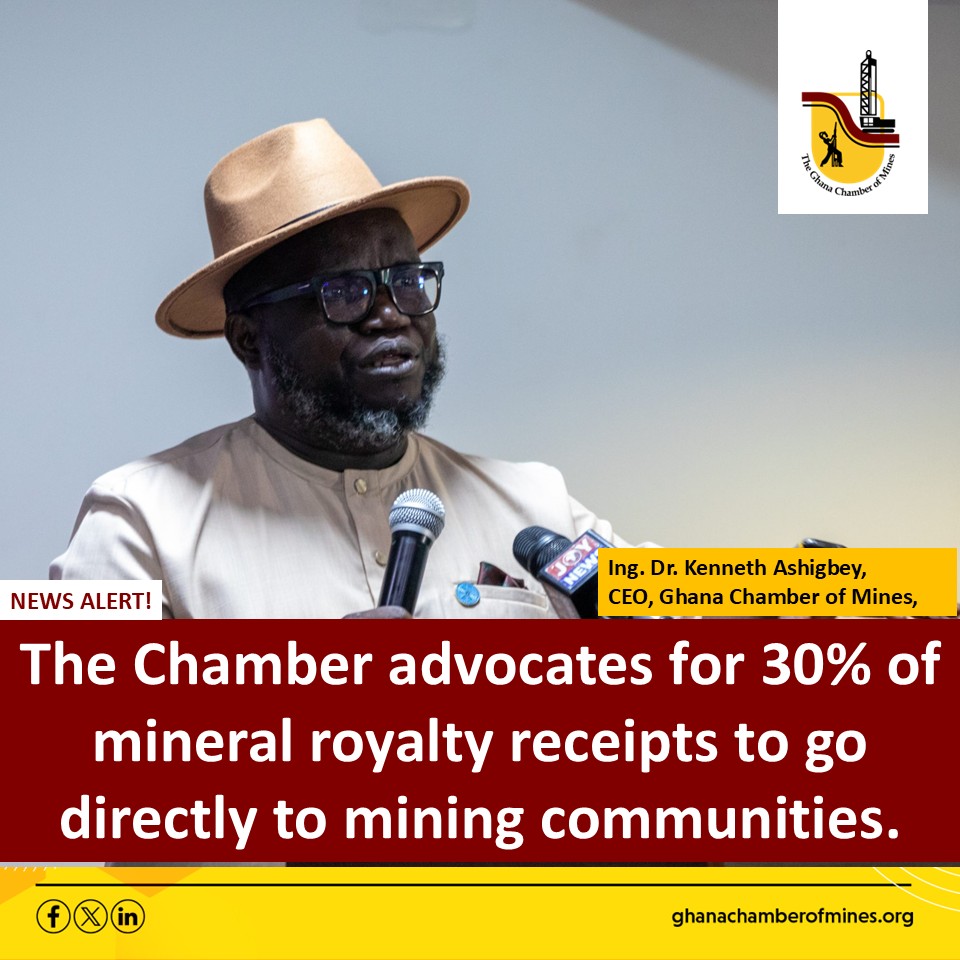
Revenue Mobilisation and Visits to the International Monetary Fund
Equally problematic is the suggestion that Ghana’s recurring fiscal and macroeconomic challenges are attributable to the structure of the mining sector or to foreign participation in mining. The empirical evidence does not support such a proposition. In 2025 alone, the mining sector contributed approximately GHS19 billion in taxes to the Ghana Revenue Authority, representing nearly 23% of direct domestic tax collections. Notably, these revenues were generated predominantly by large-scale mining operations, even though such operations accounted for less than half of national gold output.
A more precise diagnosis of the revenue mobilisation challenge is found in the asymmetric fiscal contribution of the small-scale mining sector. In 2025, small-scale mining operations produced in excess of 3 million ounces of gold, representing more than half of national output, while contributing under GHS0.5 million in taxes to the state. This structural gap constitutes one of the most significant fiscal inefficiencies in the Ghanaian economy and represents a far more tractable and impactful revenue reform opportunity. The Chamber urges Government to prioritise the formalisation and systematic taxation of small-scale mining operations as an immediate fiscal policy imperative and invites the IEA to direct a commensurate degree of its advocacy toward this demonstrably material revenue challenge.
Furthermore, there is no credible empirical basis for attributing Ghana’s repeated engagements with the International Monetary Fund to the operations or ownership structure of the mining sector. On the contrary, the mining industry has consistently served as a stabilising pillar of the economy, providing major sources of foreign exchange earnings, fiscal revenues, and external sector resilience. Indeed, the sector has historically served as a cornerstone of Ghana’s economic programmes presented to the IMF, with mineral export revenues providing critical support to the country’s external account position during successive Fund-supported programmes.
Human Capital Development
The development of a highly skilled Ghanaian mining workforce further demonstrates the developmental contribution of private investment within the sector. Sustained investments in training, skills development, and human capital formation by the Chamber and its member companies have contributed to a workforce composition in which expatriates account for less than 0.6% of total industry employment. Ghanaian professionals now occupy senior technical, operational, and executive roles not only within Ghanaian mining operations but also across international mining jurisdictions. The University of Mines and Technology, cited in the IEA statement as evidence of indigenous technical capacity, was established through the initiative of the private sector-led large-scale mining sector and continues to receive institutional and financial support from it, including contributions exceeding $5 million since 2019.
Environmental Impact in Host Communities Despite Decades of Extraction
The mining communities in Ghana, specifically those affected by Gold Fields’ operations in Tarkwa, face various challenges that warrant attention. Contrary to claims that these operations primarily favour foreign interests at the expense of local development, evidence indicates significant investments in community development over three decades. As previously stated, Gold Fields Ghana has notably contributed through its Gold Fields Ghana Foundation, a structured platform for community development. The constitutional framework in Ghana assigns the primary responsibility for local development to several entities, including the central government and local assemblies. Mining companies, as commercial entities, are legally obligated to fulfil roles such as tax payments and compliance with environmental regulations, rather than serve as primary providers of public infrastructure.
Mineral royalties totalling GHS10.17 billion from 2014 to 2023 are allocated to support local development projects through statutory channels, such as the Minerals Development Fund. Our question should be, how are these allocated? We need to improve what our Assemblies use their share of royalties to spur investment and development. Infrastructure projects initiated by mining companies are voluntary, subject to government oversight and community participation, and showcase a collaborative approach to public development.
Environmental regulations governing mining operations in Ghana have become more stringent. Gold Fields adheres to guidelines from various regulatory bodies and implements land reclamation initiatives and community engagement frameworks. But how can the IEC discuss environmental impact without losing sight of those who drive it? It is illegal miners, galamsey, who are responsible and not large-scale mines like Gold Fields and other members of the Chamber. We invite the IEA to respond to HE President John Mahama’s invitation to direct some of its advocacy to the fight against Galamsey, which is destroying Ghana. While challenges persist, the focus should be on regulatory enhancements and collaborative solutions rather than dismissing existing developmental efforts.
Discussions on enhancing local benefits from mining are crucial and should be evidence-based, with a national policy goal of sustainably increasing these benefits while ensuring investment stability and economic competitiveness.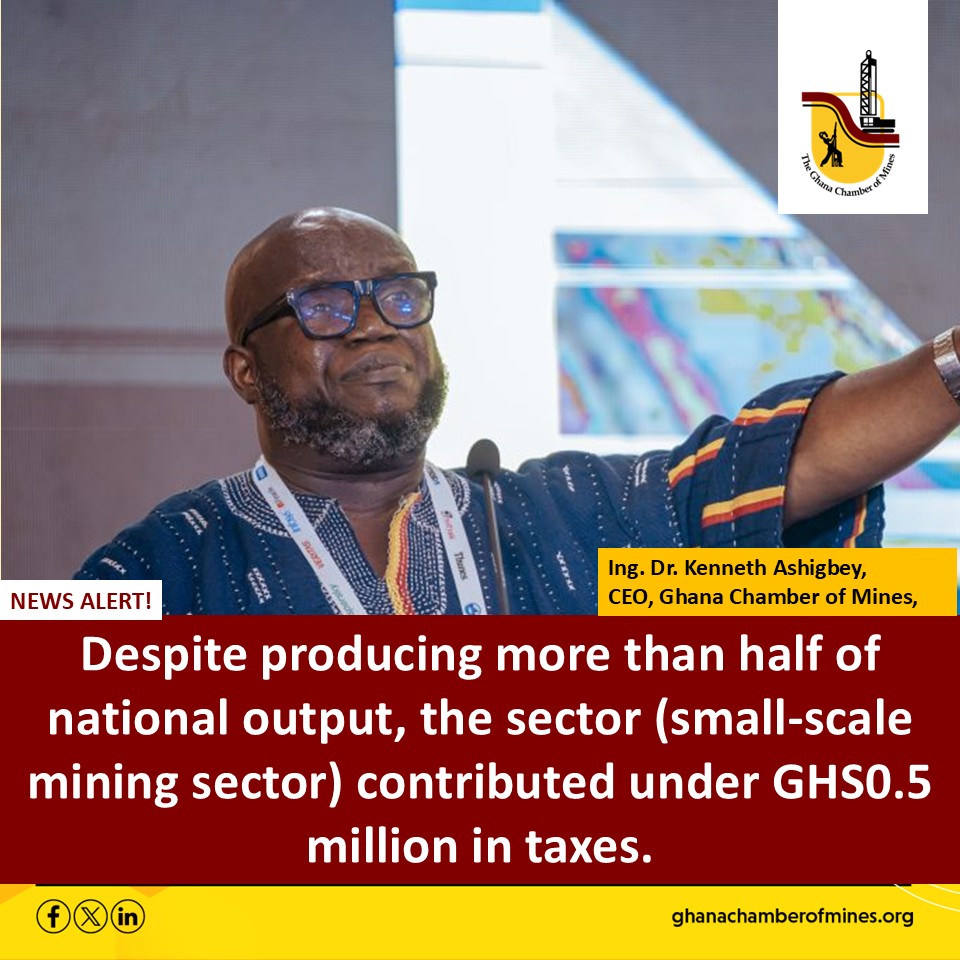
Resource Governance: International Evidence
The principle of permanent sovereignty over natural resources, as affirmed in United Nations General Assembly Resolutions 1803 and 3281 and the African Charter on Human and Peoples’ Rights, is not in contention. Ghana’s sovereign rights over its mineral endowment are legally established and are operationally expressed through the regulatory and fiscal frameworks governing the sector.
The IEA’s treatment of ownership, sovereignty, and operational participation conflates legally and economically distinct concepts. Under the Minerals and Mining Act, 2006 (Act 703), all minerals in their natural state are vested in the President on behalf of, and in trust for, the people of Ghana. This statutory vesting of mineral ownership in the state is absolute and unaffected by the operational arrangements adopted for their extraction. The grant of a mining lease confers a limited right to explore for, extract, and commercialise mineral resources within a defined concession area; it does not affect a transfer of ownership of the underlying mineral resource. Operational participation by private investors, therefore, does not derogate from Ghana’s sovereignty over its mineral endowment, nor does it diminish the state’s ultimate ownership and regulatory authority over the sector.
This principle is reflected in the dominant approach to mineral resource development across the world’s leading mining jurisdictions, including Botswana, Chile, Australia, and Canada. In each of these jurisdictions, the effective exercise of resource sovereignty has been achieved not through the exclusion of private capital, but through the establishment of robust legal, regulatory, and fiscal frameworks that ensure the state captures an equitable share of mineral rents while preserving investment attractiveness and operational efficiency.
It is within this evidence-based and institutionally grounded framework that the Chamber advances its position on the future of the Tarkwa Mine. Ghana’s Minerals and Mining Act, 2006 (Act 703), together with the associated fiscal, regulatory, and contractual instruments, already provides a comprehensive statutory framework for the sovereign governance and management of the country’s mineral resources. The renewal of the Tarkwa Mine lease is therefore properly a matter to be determined through the established legal, administrative, and commercial processes governing mining lease renewals, having due regard to the mine’s operational performance, fiscal contributions, developmental impact, environmental obligations, and prevailing market conditions. Under the Minerals and Mining Act, 2006 (Act 703), section 44 reads.
- (1) A holder of a mining lease may, at any time but not later than three months before the expiration of the initial term of the mining lease or a shorter period that the Minister allows, apply in a prescribed form to the Minister for an extension of the term of the lease for a further period of up to thirty years in respect of all or any number of contiguous blocks the subject of the lease and in respect of all or any of the minerals the subject of the lease.
44 (3) On an application duly made under subsection (1) and if the holder has materially complied with the obligations imposed by this Act with respect to the holding of and activities pursuant to the mining lease, the Minister shall grant the extension of the term of the lease on conditions specified in writing.
The Chamber recognises that lease renewal processes inherently provide Government with the opportunity to review and, where necessary, recalibrate applicable terms and conditions within the existing statutory framework to reflect evolving national priorities and market realities. However, in the Chamber’s considered view, Ghana’s long-term national interests are best advanced through the predictable, transparent, and consistent application of the established legal and regulatory regime, rather than through policy interventions that introduce material uncertainty into investment arrangements that have underpinned three decades of sectoral growth and contributed significantly to Ghana’s emergence as Africa’s leading gold producer. Policy and regulatory certainty, and security of tenure, are the pivots and cardinal elements essential to the development and sustenance of the mining industry.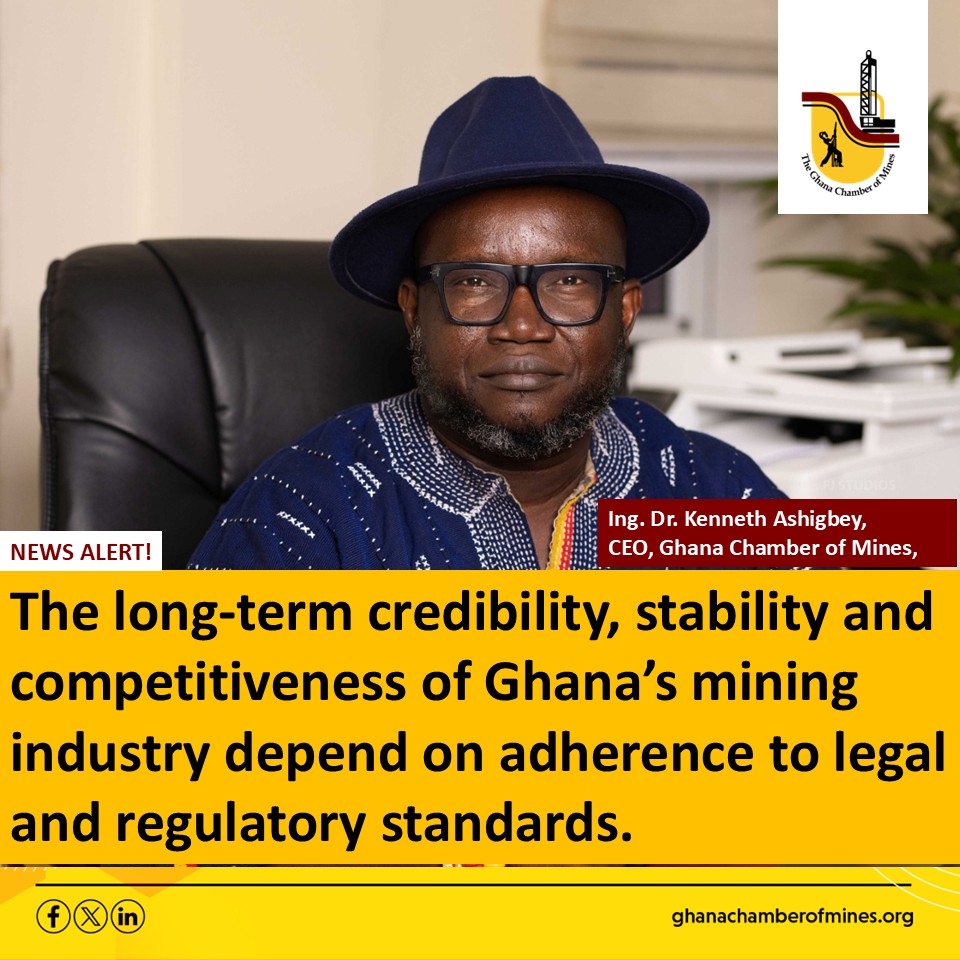
Conclusion
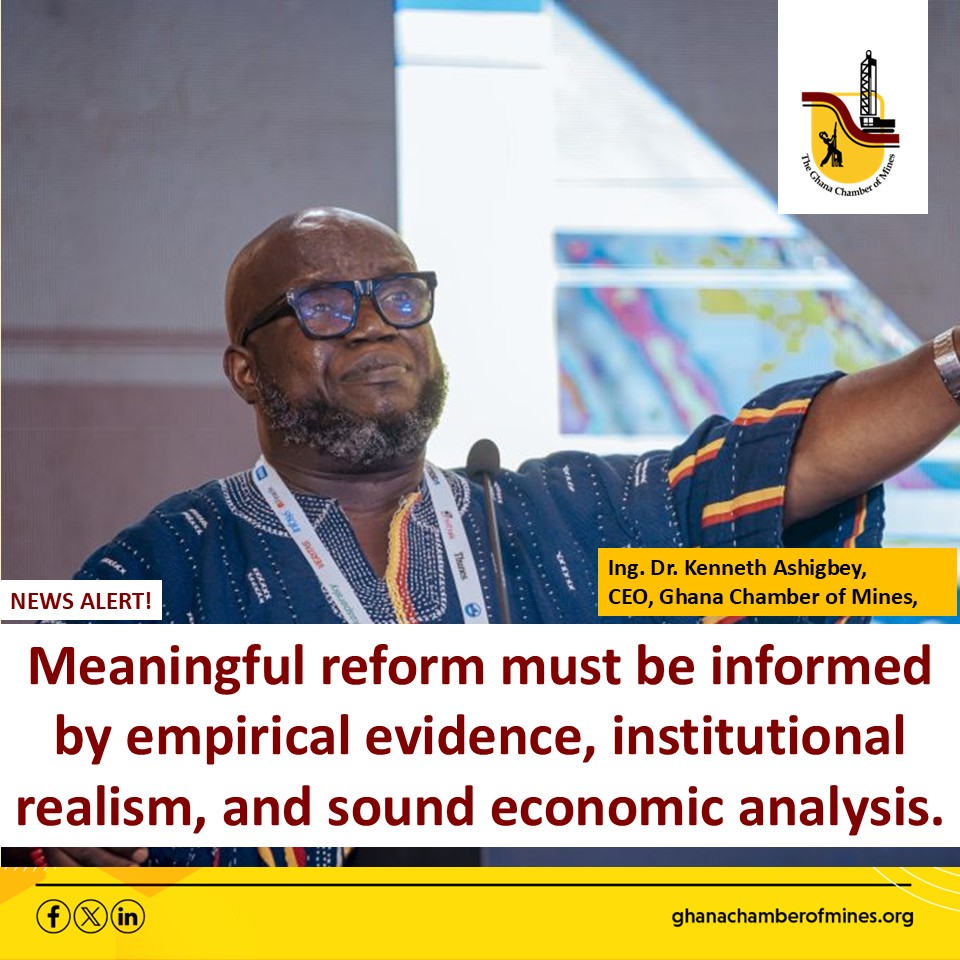
Ghana’s mining sector is not without challenges, and continuous policy refinement remains both necessary and desirable. However, meaningful reform must be informed by empirical evidence, institutional realism, and sound economic analysis rather than oversimplified policy prescriptions. Ghana’s evolution into a leading mining jurisdiction has been underpinned by decades of capital investment, policy continuity, institutional learning, and productive public-private collaboration. Following the IEA prescription will completely negate all that we have built and will be a recipe for returning to the IMF for bailouts.
The imperative, therefore, is not to reverse these gains through policy interventions that are insufficiently anchored in sectoral evidence, but rather to strengthen and modernise the sector in ways that deepen benefits to the state, improve developmental outcomes in mining communities, sustain sectoral competitiveness, and reinforce the investor confidence necessary to attract long-term capital into one of Ghana’s most strategically important economic sectors.
The Ghanaians should attain the heights of the mining industry, and that has been going on for some time now. We have had Ghanaian-owned mines in Ghana; Kibi Gold Fields has explored and continues to mine; we have had Adamus owning mines in Ghana and in other jurisdictions. We have Asante Gold with significant Ghanaian ownership. Yes, we should grow that, but the prescription for that is not taking from investors who have the right for renewal, as our laws say that “the Minister shall grant the extension of the term of the lease on conditions specified in writing”. It is important to note that Ghana has significant mineral resources, and we should, as prescribed in the manifestos of almost all parties, invest in exploration. We can also encourage our citizens to invest in greenfield and brownfield exploration to find and develop new mines. We should not shut Ghana from being an attractive investment destination for both local and foreign capital. It is when they both coexist that we can win as a country.
We at the Chamber are patriotic Ghanaians too, and what we seek is the sustainable development of Ghana. We should not set a precedent that will not just make Ghana an unattractive destination but also limit our citizens who are also in the process of becoming global mine owners with presence in other countries to be denied those opportunities, just because IEA is asking the government to take away from another African company, what our laws say is their right. Thank God, our Hon Minister for Lands and Natural Resources still believes in attracting the necessary investment into the mining sector and needs to maintain that balance to ensure we consolidate our position as the leading gold producer in Africa, improve our global standing, and not regress. God bless our Homeland, Ghana, and make it more prosperous and great.
Issued by:
The Ghana Chamber of Mines
NOTES TO THE EDITOR
The Ghana Chamber of Mines is the main mining industry association in Ghana. The Chamber represents the collective interests of companies involved in Ghana’s mineral exploration, production, and processing.
This post has already been read 1150 times!
Share this content:









Post Comment